
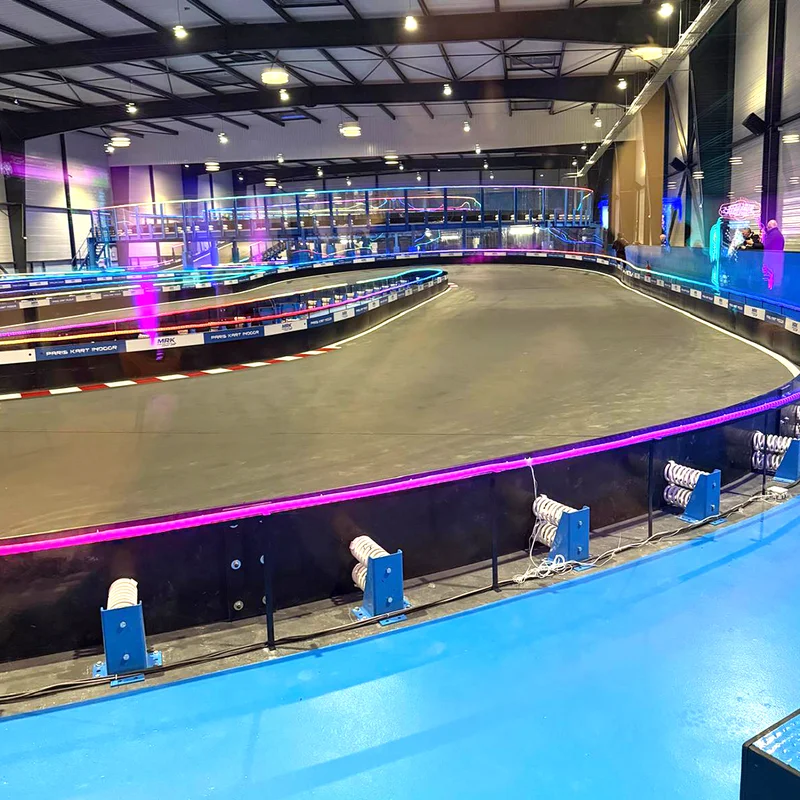
A radio check at reception tells you little about whether the pit team can understand a call from beneath a bridge. Before ordering staff radios or accepting an installation, list the calls that must work, mark both ends of each call on the track plan and agree how to check them with the radio supplier. This guide is for day-to-day staff communications at a karting venue.
Map the calls your team actually makes
Start with one plan per level and a list of staff roles. For each routine exchange, write down who calls whom, where each person is standing and what information must be understood. A circuit with several levels may need separate entries for the ramp landing and the ground-level marshal position directly below it. Give them different IDs and show their levels on the plan.
- Pits to track supervision: check a call from the pit exit to the normal position on the upper deck.
- Track supervision to workshop: check the call from the ground-floor position beneath the bridge to the workshop, with its door in its usual position.
- Reception to pits: check whether the pit team can hear a group changeover message at the point where it normally receives one.
These are suggested test pairs. Use your own operating positions, including any location used only on a busy session changeover.
Arrange a repeatable two-way check
Ask the radio specialist which equipment and configuration should be used for the test. Schedule checks while the circuit is closed to drivers, and use the actual handsets, headsets or microphones and carrying positions where possible. Note the date, plan revision, equipment and relevant conditions, such as door position, fit-out stage and background noise. If the fit-out is unfinished, record which calls will need a repeat check in the completed venue.
At each pair of positions, send a short test message with a location and a neutral instruction, such as “Upper landing, test only, repeat point U-02.” Ask the receiver to read it back, then swap directions. Record whether the message was understood on the first call, needed repetition or was received only after one person moved. Document the new position if a move was needed. Agree any technical readings, acceptance criteria and further survey work with the specialist. A staff walk-through checks practical use and does not replace a specialist assessment or the venue’s emergency communications arrangements.
Keep unresolved calls on the handover list
In a hypothetical venue, a call from the workshop reaches the upper landing, but the return call becomes clear only after the workshop operator opens the door. Keep the two results separate. Ask the supplier to investigate the door-closed condition, put a named owner and retest date against that item, and record the approved operating arrangement after review. Avoid closing the item on the strength of a different test condition.
Keep the marked plans, results and supplier handover together. Revisit affected call pairs after changes to the track deck, partitions, equipment or staff positions. The MRK operations guide can help assign responsibility for that record.
Separate radio work from the track quotation
Ask the specialist to identify the survey, hardware supply, programming, installation and repeat testing in its proposal. Check which party provides power, cable routes and any mounting locations before works are booked. Use MRK’s multi-level track design service to review how the staff positions and routes fit the circuit plan.
The MRK track supply estimator gives an indicative price excluding VAT for selected track items. Treat radio work as a separate enquiry and check track equipment supply, transport, installation, resin application and applicable taxes separately. Share your floor plans, proposed staff positions and unresolved interfaces to request a track quotation from MRK.
Sources and further reading
Motorola Solutions’ overview of indoor coverage surveys describes how specialists document measured coverage and weak spots. The test examples above are planning examples for karting staff, without prescribing a radio system or a coverage threshold.